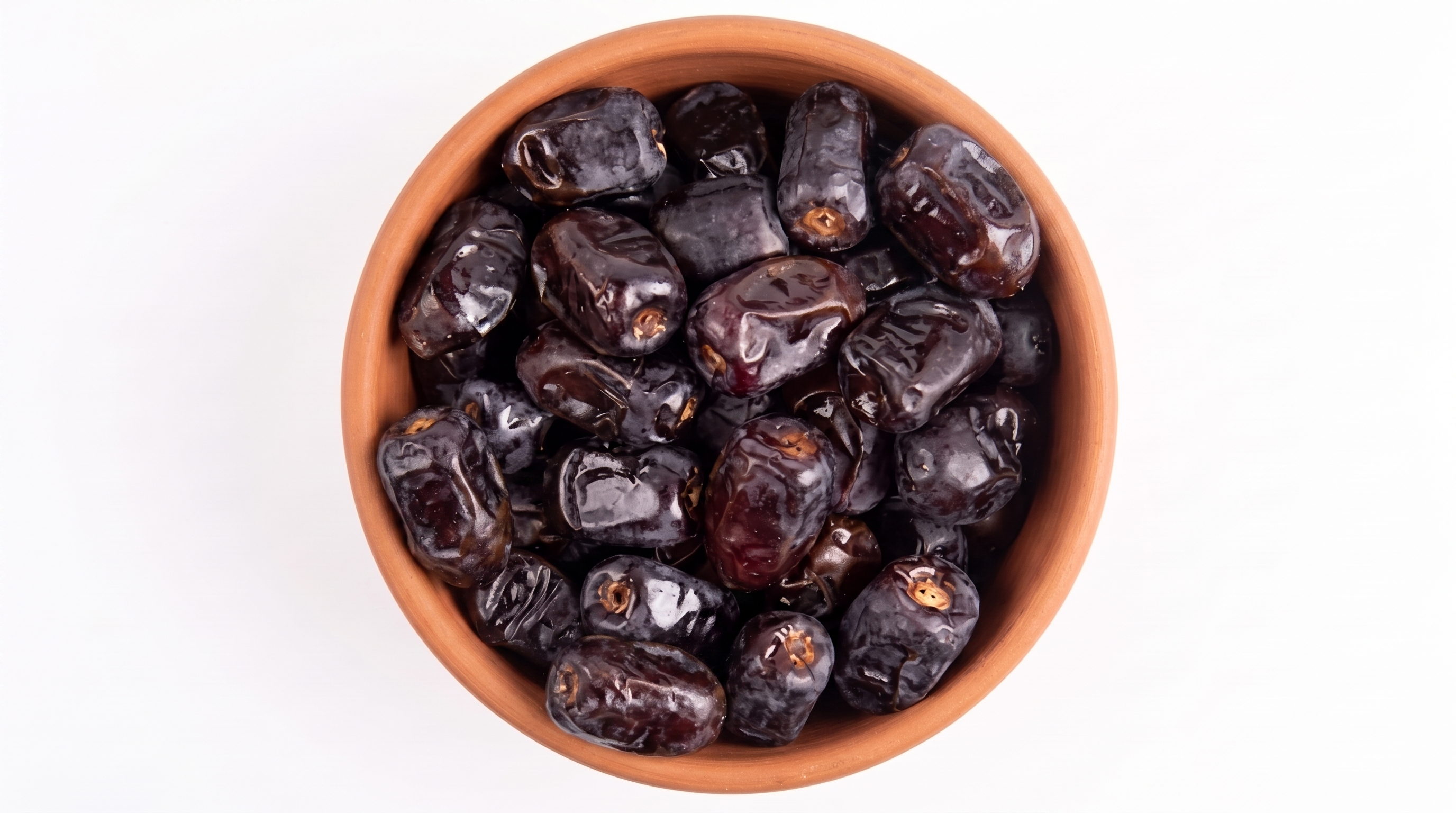
If you're sourcing dates for the first time, the number of Iranian varieties on offer can be disorienting — every supplier seems to list a different set of names, and the same date can go by two or three of them depending on the exporter. This guide breaks down the four varieties VARAS Food exports directly from Kerman Province, Bushehr and Khuzestan, so you can match the right one to your market before you request a sample.
The Four Varieties at a Glance
| Variety | Color & Texture | Moisture | Shelf Life | Best For |
|---|---|---|---|---|
| Kaluteh | Red to dark brown, firm, oval | 14–22% | Moderate | Retail, gifting, plain or oiled finish |
| Mazafati | Near-black, soft, fudgy | 18–35% | Short–moderate (cold chain helps) | Premium retail, fresh eating, gifting |
| Zahedi | Golden-yellow, dry, firm | Under 14% | 1–3 years | Long-distance export, baking, food processing |
| Mordasang | Soft yellow, semi-dry | Moderate | Moderate | Specialty/health-food retail, limited volume |
Kaluteh: The Versatile Middle Ground
Also sold as Kali, Kalooteh, or Kalote dates, Kaluteh is grown in the Jiroft region of Kerman Province — the same ground VARAS Food operates on. It sits between Mazafati and Zahedi in texture: firmer than Mazafati, softer and moister than Zahedi. We offer it both natural and lightly oiled; the oiled finish gives a glossy, premium retail look and a modest shelf-life boost, which is why it's often the variety importers choose for their first order. See full Kaluteh specs →
Mazafati: The One Everyone Asks For
Mazafati (also called Kimia or Bam dates) is Iran's signature export date and accounts for roughly 20% of the country's total date output. It's the softest, darkest, and most indulgent of the four — think dark chocolate and molasses rather than simple sweetness. The trade-off is moisture: at up to 35%, Mazafati needs more careful cold-chain handling than Zahedi, so it suits buyers who can move it relatively quickly or maintain refrigeration through distribution. See full Mazafati specs →
Zahedi: Built for the Long Haul
If your priority is shelf life over indulgence, Zahedi is the answer. Under 14% moisture gives it a 1–3 year shelf life — by far the longest of the four — which is exactly why it's the variety most exported to distant markets and used in industrial food processing and baking. It's golden-yellow, firm, and nutty rather than fudgy. For a buyer weighing logistics risk over a long shipping route, Zahedi removes most of the guesswork. See full Zahedi specs →
Mordasang: The One Most Suppliers Don't Have
Mordasang is native specifically to Jiroft and rarely offered for export at all — Iran produces about 15,000 tons a year, almost entirely for the domestic market. It's traditionally classified as "cold nature" in Iranian medicine, distinct from every other variety on this list, and its flesh separates cleanly from the pit with a soft yellow color and mild sweetness. If you're building a specialty or health-food retail line and want a genuine point of difference from every other importer's catalog, this is it — but confirm current export availability before you plan volume around it. See full Mordasang specs →
How to Choose
- Shipping a long distance with limited cold chain? Start with Zahedi.
- Building a premium retail or gifting line? Mazafati or oiled Kaluteh.
- Want one variety that works across most retail contexts? Kaluteh is the safest first order.
- Looking for a specialty product with limited competition? Ask about Mordasang.
Whichever variety fits your market, we recommend starting with a sample order and our current spec sheet before committing to bulk volume — reach out here or via WhatsApp and we'll walk you through it.